As an Amazon Associate, I earn from qualifying purchases at no extra cost to you.
6 Best Range Hoods (Buying Guide) 2026

Cooking smells are great. Smoke and grease on your ceiling? Not so much. Finding the right range hood feels overwhelming because there are too many options and too little honest advice. In this article I will show you the top 6 best range hoods worth your money, with real details to help you pick the right one fast.



Top 6 Best Range Hoods You Can Buy Now
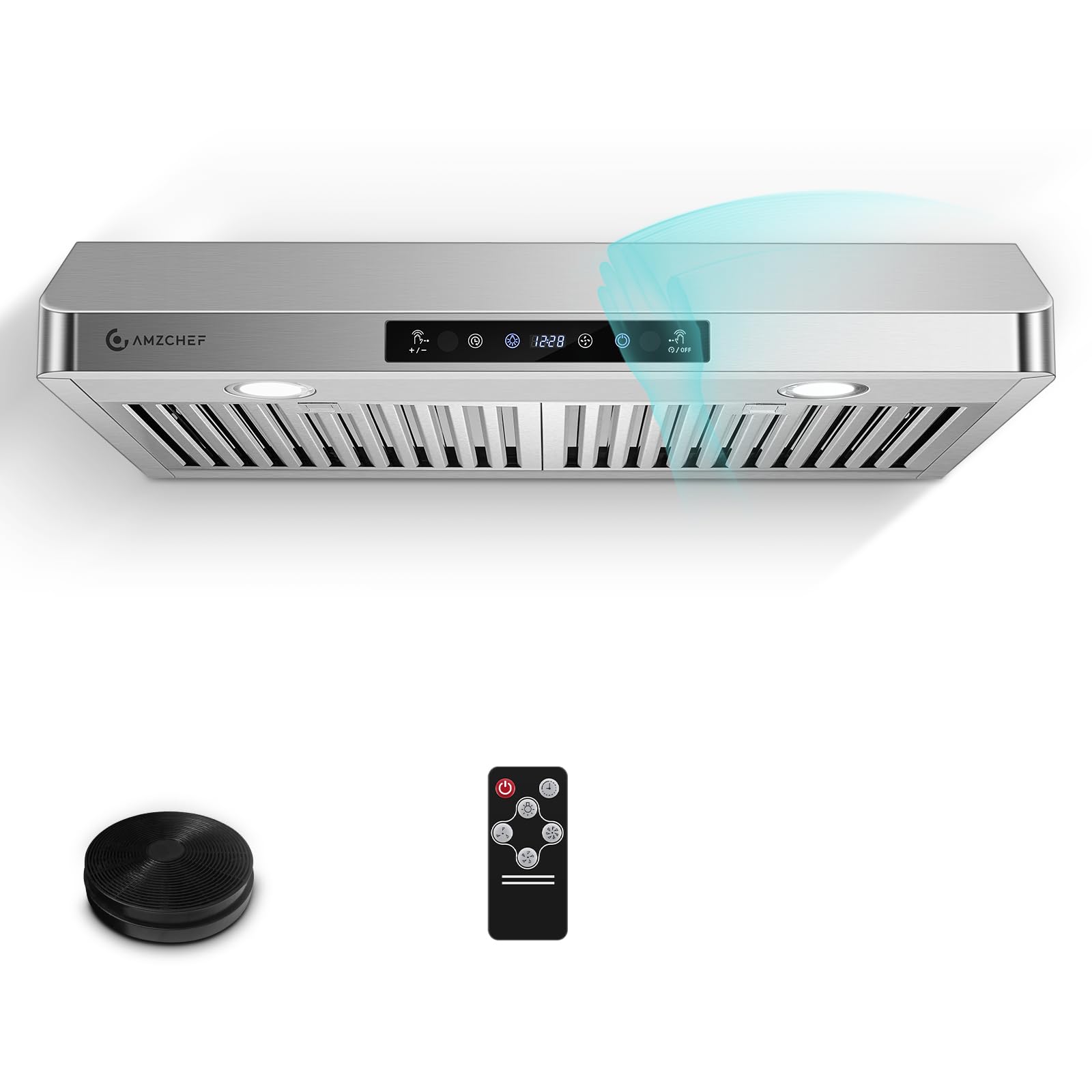
AMZCHEF 750CFM Under Cabinet Range Hood – Best Budget Pick for Everyday Cooks
If you cook regularly but don’t want to spend a fortune, the AMZCHEF 750CFM is worth a serious look. It sits under your cabinet, fits most standard kitchens, and does the job without drama. The 750 CFM airflow is strong enough to handle everyday cooking, from scrambled eggs to stir-fry.
The stainless steel build looks clean and holds up well over time. It doesn’t feel cheap when you touch it. The filters are dishwasher-safe, which is a real win. You just pop them out, toss them in the dishwasher, and done. No scrubbing greasy mesh by hand.
It runs on three fan speeds, so you can keep it quiet during light cooking and crank it up when you’re searing chicken. The LED lights brighten your cooktop nicely, which helps more than you’d expect when you’re watching a sauce reduce.
One thing to watch: 750 CFM works well for most home kitchens, but if you have a high-BTU gas range or a large open kitchen, you might want more power. For a regular cooking setup though, this one delivers solid everyday performance at a price that makes sense.
- Airflow: 750 CFM
- Filters: Dishwasher-safe aluminum mesh
- Fan speeds: 3
- Lighting: LED
- Style: Under cabinet, stainless steel
- Best for: Budget-friendly everyday cooking
BRANO 900 CFM Insert Range Hood – Best for Tech Lovers Who Cook
The BRANO 900 CFM is genuinely different. It has gesture control, which sounds gimmicky until you actually use it. Wave your hand and the fan turns on. When your hands are covered in raw chicken or dough, that’s not a gimmick, that’s useful.
It pulls 900 CFM, so it handles serious cooking sessions without breaking a sweat. The insert design means it fits into a custom hood or cabinetry, giving you a cleaner look if you’re building or renovating your kitchen. You get that built-in, intentional look without paying custom appliance prices.
It also works as a ductless unit if you can’t run ductwork, which gives you flexibility. The convertible setup takes some effort to configure, but the instructions are clear enough. The adjustable fan speeds let you dial in exactly how much ventilation you need at any moment.
The gesture control does take a few tries to get used to. You have to hold your hand in the right spot for about a second. But after a couple of uses, it feels natural. If you like your kitchen to feel modern and your tech to actually work, this one is a standout pick.
- Airflow: 900 CFM
- Control: Gesture sensing
- Style: Insert, ductless convertible
- Fan speeds: Adjustable
- Best for: Modern kitchens and tech-forward cooks
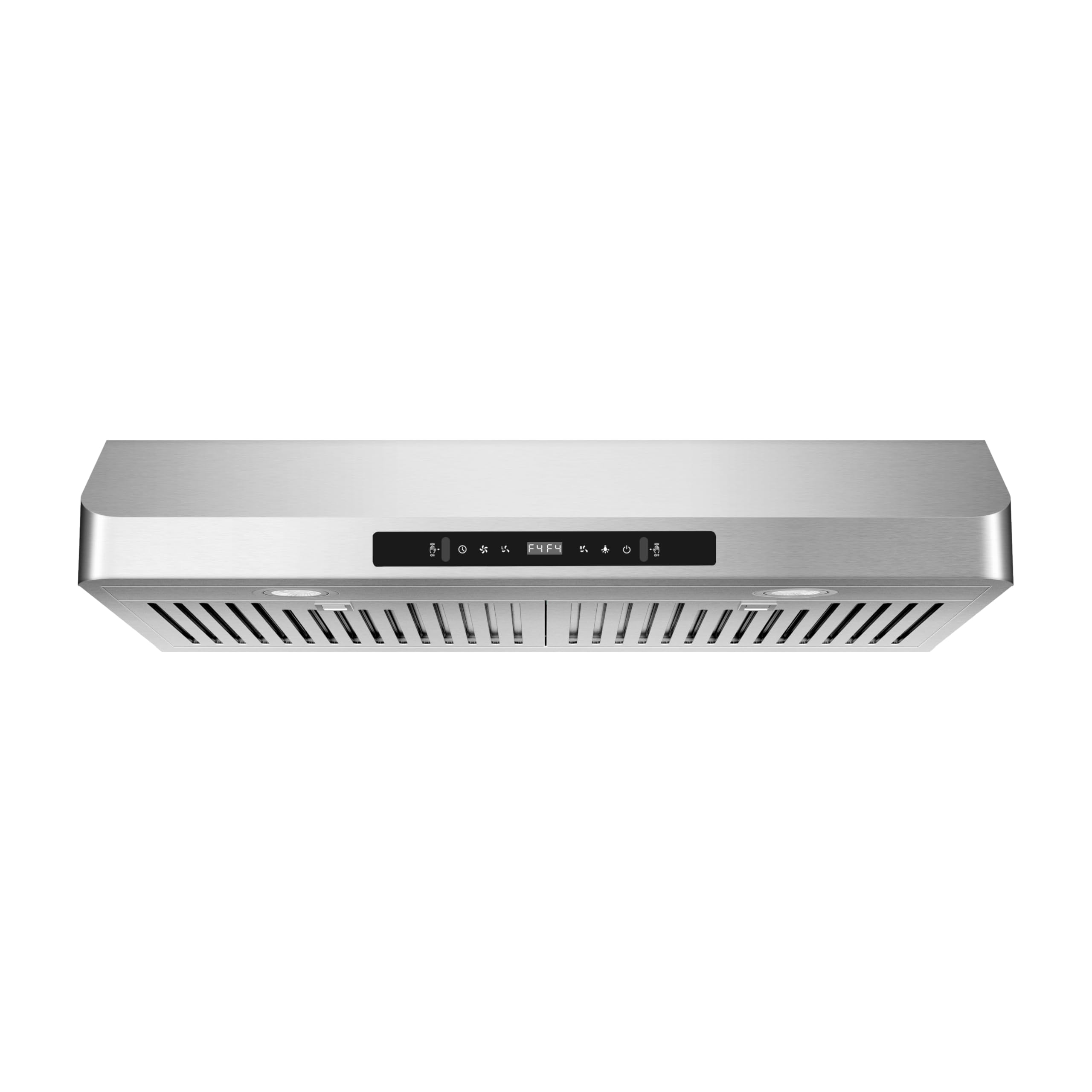
EVRKITCH Under 900CFM Range Hood – Best for Heavy-Duty Home Cooking
The EVRKITCH is built for people who actually cook. Like, really cook. Think daily frying, wok cooking, high-heat grilling on an indoor range. This thing pulls 900 CFM and keeps your kitchen air clean even when the smoke is serious.
The stainless steel housing is thick and feels premium. The permanent filters are a big plus here. You don’t replace them, you just clean them. Over time, that saves you money and reduces waste. For cooks who use their range hood every single day, permanent filters make a real difference.
The under-cabinet installation fits standard setups well. The build is solid, and the airflow is consistent across fan speeds. It doesn’t sound like a jet engine on the lower settings, which matters if your kitchen is open to a living space where people are trying to hold a conversation.
One honest note: at full 900 CFM, it is loud. But that’s true of any powerful hood. You use the high setting when you need it, not as a default. For anyone who cooks intensely and wants a hood that actually keeps up, the EVRKITCH earns its spot on this list.
- Airflow: 900 CFM
- Filters: Permanent, reusable
- Style: Under cabinet
- Material: Stainless steel
- Best for: Heavy daily cooking, high-heat cooking styles
900 CFM Gesture Control Stainless Steel Range Hood – Best for Hands-Free Convenience
This one catches your eye fast. Gesture sensing at 900 CFM is a strong combination. You wave your hand, the hood responds. It’s not a party trick, it’s actually practical when both hands are busy at the stove. Cooks who multitask will get this immediately.
The stainless steel finish is clean and matches most modern kitchen aesthetics. The fan pulls hard at 900 CFM, enough for gas ranges and busy kitchen sessions. Multiple speed settings mean you adjust to whatever’s happening on the stove without overthinking it.
The LED lighting is bright and positioned well over the cooktop. Good lighting while cooking matters more than people realize. You see exactly what’s happening in the pan, and that makes a real difference when you’re timing a sear or checking a sauce color.
Installation is straightforward for anyone comfortable with basic DIY work. If this is your first time installing a range hood, read the manual carefully and take your time with the venting setup. Overall, this is a good buy for anyone who wants gesture control, real suction power, and a kitchen that looks put-together.
- Airflow: 900 CFM
- Control: Gesture sensing
- Lighting: LED
- Style: Under cabinet, stainless steel
- Best for: Hands-free control during active cooking
IKTCH 900 CFM Under Cabinet Range Hood – Best All-Around Performer
The IKTCH has been around long enough to earn real trust. It’s one of those hoods that shows up on best-of lists for a reason: it just works, consistently. The 900 CFM motor is strong, the build quality is good, and the adjustable fan speeds give you real control.
The bullet design looks sharp under a cabinet. It doesn’t just sit there looking functional, it actually adds something to the kitchen visually. Stainless steel finish resists fingerprints better than most, which anyone with a busy kitchen will appreciate after the first week.
The filters are removable and easy to clean. LED lights illuminate the cooktop clearly. The controls are simple, no learning curve. You flip it on, set your speed, cook. That’s it. Sometimes you want something that doesn’t make you think, and the IKTCH delivers that every time.
If you’re looking for one hood that does everything well without a specific trick or gimmick, this is your answer. It’s the safe pick in the best possible way. Reliable, good-looking, powerful, and easy to live with day after day. Hard to go wrong here.
- Airflow: 900 CFM
- Style: Bullet design, under cabinet
- Filters: Removable, easy clean
- Lighting: LED
- Best for: Anyone who wants reliable, no-fuss performance
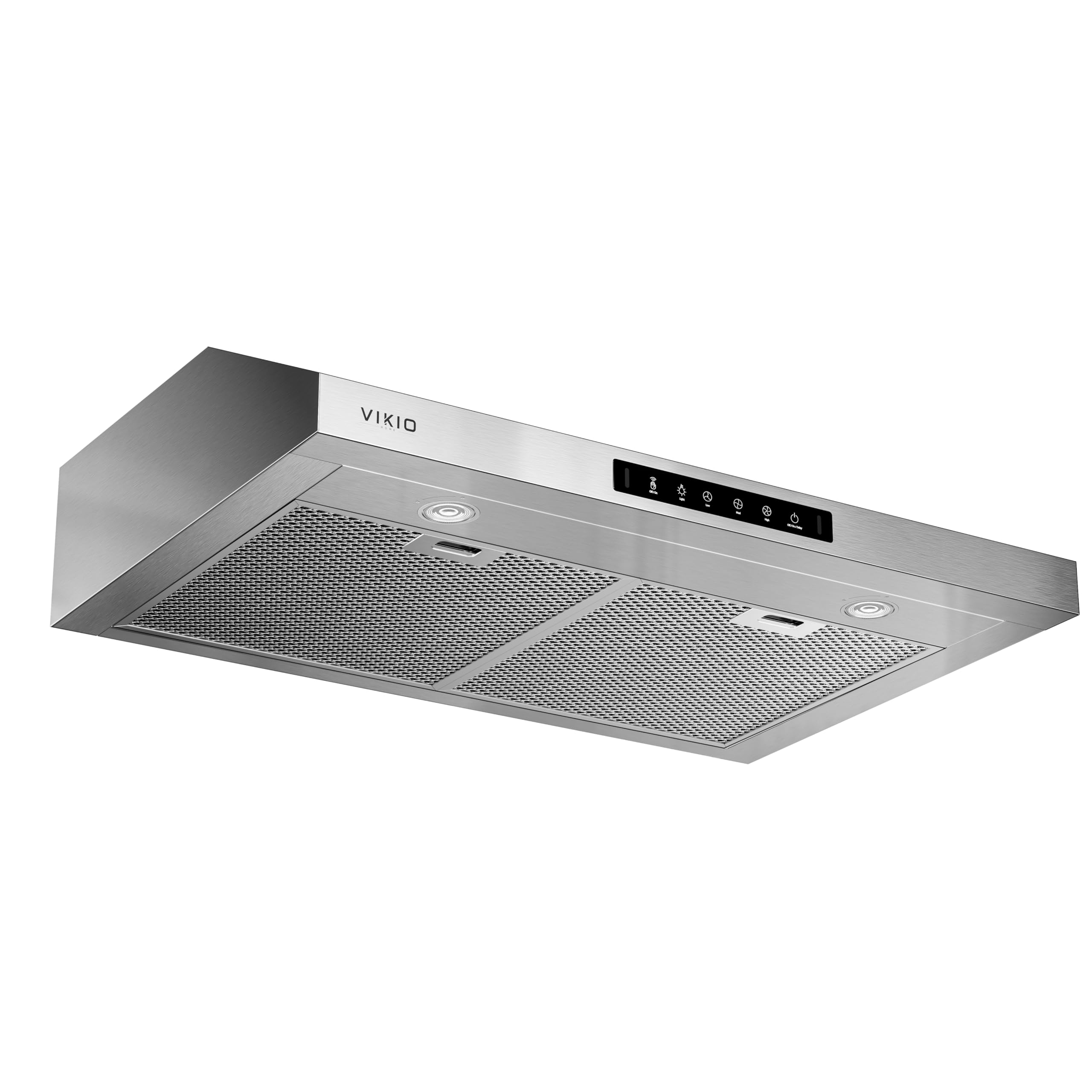
VIKIO HOME 900 CFM Range Hood – Best for Reusability and Long-Term Value
The VIKIO HOME is the smart pick if you think long-term. It uses centrifugal fan technology, which moves air efficiently and quietly compared to standard axial fans. You get 900 CFM without the constant roar that cheaper hoods produce at high speed.
The reusable filters are a standout feature. Buy it once, clean it regularly, never buy replacement filters. Over years of cooking, that adds up. It’s also less waste, which matters to a lot of buyers today. The stainless steel housing is durable and easy to wipe down after cooking sessions.
Multiple fan speeds let you match the ventilation to what you’re actually cooking. Light breakfast, low speed. Full dinner party with a gas range, high speed. The range gives you control without forcing you to use maximum power every time.
The VIKIO HOME won’t get as much attention as the gesture-control hoods, but it’s a workhorse. Quiet, efficient, built to last, with filters you never have to replace. If your priority is value over time and you cook regularly, this one deserves a hard look before you decide.
- Airflow: 900 CFM
- Fan type: Centrifugal
- Filters: Reusable
- Material: Stainless steel
- Best for: Long-term value, quiet operation
I hope this breakdown makes your decision a lot easier. Every hood on this list has something real to offer. If you want gesture control, go BRANO or the 900 CFM Gesture model. Want long-term value? VIKIO HOME. Need the most reliable all-rounder? IKTCH. Match the hood to how you actually cook, and you won’t regret it. Your kitchen deserves proper ventilation.
| Product | Airflow | Key Feature | Best For |
|---|---|---|---|
| AMZCHEF 750CFM | 750 CFM | Dishwasher-safe filters | Budget everyday cooking |
| BRANO 900 CFM Insert | 900 CFM | Gesture control, ductless convertible | Tech-forward modern kitchens |
| EVRKITCH 900 CFM | 900 CFM | Permanent reusable filters | Heavy-duty daily cooking |
| 900 CFM Gesture Control | 900 CFM | Gesture sensing, LED lights | Hands-free convenience |
| IKTCH 900 CFM | 900 CFM | Bullet design, simple controls | Reliable all-around use |
| VIKIO HOME 900 CFM | 900 CFM | Centrifugal fan, reusable filters | Long-term quiet value |
✅ Also Read: 6 Best Keypad Door Lock Picks (Buying Guide) 2026
Things to Consider Before Buying a Range Hood: Don’t Make These Costly Mistakes
Most people pick a range hood based on how it looks. Then they install it, turn it on, and realize it’s either too loud, too weak, or doesn’t even fit right. That’s a frustrating and expensive problem to fix after the fact.
The truth is, buying a range hood isn’t just about style. There are a few key things that actually determine whether it works well in your kitchen or just hangs there looking pretty.
So before you add anything to your cart, let me walk you through the things to consider before buying a range hood. Get these right, and you’ll be happy with your choice for years.
CFM Rating: How Much Airflow Do You Actually Need
CFM is the first number you should look at. It stands for cubic feet per minute, and it tells you how much air the hood moves every minute. A low CFM hood on a powerful gas range is like using a small fan to clear smoke from a bonfire. It just doesn’t work.
The general rule is 100 CFM for every 10,000 BTU your stove produces. So a 40,000 BTU gas range needs at least 400 CFM, ideally more. Electric ranges need less power overall, so 400 to 600 CFM handles most of them well. But if you cook at high heat often, size up a little for a safety buffer.
Here’s something most buyers miss: too much CFM in a small, sealed kitchen creates negative air pressure. That pulls cold drafts in through windows and doors. So match the number to your actual setup, not just the biggest option available.
- Use 100 CFM per 10,000 BTU as your baseline
- Electric ranges typically need 400 to 600 CFM
- Gas ranges with high BTU burners need 600 to 900 CFM or more
- Avoid oversizing in small or tightly sealed kitchens
Ducted vs. Ductless: Which Setup Works for Your Home
This decision shapes everything else, including how well the hood performs and how much the installation costs you. A ducted hood pulls air out of your kitchen and vents it outside through a duct. A ductless hood filters the air through charcoal and pushes it back into the room.
Ducted setups win on performance, no question. They remove heat, grease, moisture, and odors completely. If you cook with high heat, fry food regularly, or have a gas range, a ducted hood is the better choice. The downside is that you need existing ductwork or the budget to add it, which can get expensive depending on your kitchen layout.
Ductless hoods are easier to install and work well in apartments, condos, or older homes where running a duct isn’t realistic. They handle light to moderate cooking fine. But you have to replace the charcoal filters every three to six months, or the hood stops doing its job. Don’t skip that maintenance step.
- Ducted hoods remove heat, moisture, and grease from the kitchen completely
- Ductless hoods recirculate filtered air, no vent access needed
- Ducted is better for gas ranges and heavy cooking
- Ductless filters need replacement every 3 to 6 months to stay effective
Hood Size: Getting the Width and Height Right
Size matters more than people think, and it’s one of the easiest things to get wrong. Your range hood should cover your entire cooktop at minimum. If the hood is narrower than your stove, smoke and grease escape from the sides. That defeats the whole purpose of having one.
The right approach is to go at least as wide as your cooktop, and ideally two to six inches wider on each side. So for a 30-inch range, a 36-inch hood gives you better coverage. Mounting height also plays a big role. Most hoods perform best at 24 to 30 inches above the cooktop. Go too high and the suction weakens. Go too low and it becomes a hazard.
Also check your cabinet depth before buying an under-cabinet model. Some hoods stick out further than you expect, which can block stove controls or just look awkward. Measure your space carefully, write down the numbers, and compare before you buy.
- Hood width should match or exceed your cooktop width
- Add 2 to 6 extra inches on each side for better smoke capture
- Mount the hood 24 to 30 inches above the cooking surface
- Measure cabinet depth to avoid clearance issues
Noise Level: The Spec Most Buyers Ignore Until It’s Too Late
Range hoods make noise. Some make a lot of it. The problem is most buyers never check the noise rating until after installation, and by then it’s too late to return easily. Noise is measured in sones. The lower the number, the quieter the hood. A 1-sone hood is very quiet. A 6-sone hood sounds like someone left a vacuum cleaner running in your kitchen.
This matters especially in open-plan homes where your kitchen connects to a living room or dining area. Imagine hosting dinner and having to shout over the range hood just to talk to your guests. A hood running at 6 sones on medium speed makes normal conversation genuinely difficult.
Look for a hood that runs under 3 sones on low and medium settings. The high setting will always be louder, but you only use that when things get really smoky. Centrifugal fan hoods tend to be quieter than axial fan models at similar CFM levels, so that’s worth knowing when you compare options.
- Sones measure noise level, lower numbers mean quieter operation
- Aim for under 3 sones on low and medium settings
- High settings are louder but used less often
- Centrifugal fans run quieter than axial fans at similar power levels
Filter Type: What Catches the Grease and How Often You Clean It
The filter is doing the real work every time you cook. It catches grease particles before they coat your ductwork or float back into your air. But different filter types require very different levels of upkeep, and that affects your long-term experience with the hood more than most people expect.
Aluminum mesh filters are the most common. They trap grease well and most are dishwasher-safe, so cleaning takes almost no effort. Baffle filters are thicker, capture grease more effectively, and also go in the dishwasher. Both types are reusable, which makes them easy to maintain over time. If you cook often, clean these once a month to keep the hood running at full performance.
Charcoal filters work differently. They’re used in ductless hoods to absorb odors, and you can’t wash them. You have to replace them every three to six months. Skipping this makes your ductless hood almost useless for controlling smells. Permanent reusable filters are also available on some models, and they save money over time since you never buy replacements.
- Aluminum mesh and baffle filters are dishwasher-safe and reusable
- Clean reusable filters at least once a month for active cooks
- Charcoal filters used in ductless hoods must be replaced, not washed
- Clogged filters reduce airflow and can become a fire risk over time
Installation Type: Matching the Hood to Your Kitchen Layout
Not every hood works in every kitchen. The installation type determines where the hood mounts, how it vents, and how complicated the setup gets. Picking the wrong type for your layout means extra work, extra cost, or both.
Under-cabinet hoods mount beneath your existing cabinets and suit most standard kitchens. They’re the easiest to install yourself, especially if there’s already an outlet nearby. Wall-mount hoods attach directly to the wall above the stove, typically where cabinets don’t exist. They look great in modern kitchens but need proper wall anchors and a clear duct path. Island hoods hang from the ceiling above a cooktop with no surrounding cabinets, and they need ceiling support plus longer duct runs.
Insert hoods fit inside custom cabinetry for a built-in look. They work beautifully when done right, but usually need a contractor to modify or build the surrounding cabinet. If you rent your home, always check with your landlord before cutting into walls or ceilings for ductwork. That one step can save you a serious headache.
- Under-cabinet hoods are easiest for DIY installation in standard kitchens
- Wall-mount hoods need solid anchors and a clear path for ductwork
- Island hoods require ceiling support and longer duct runs
- Insert hoods need custom cabinetry, usually best left to a professional
I hope this breakdown takes the guesswork out of your decision. The things to consider before buying a range hood come down to airflow, fit, noise, and how your kitchen is set up. Get those four things right and everything else falls into place. Take your time, measure twice, and buy something that actually matches how you cook.
| Factor | What to Do | Key Detail | Watch Out For |
|---|---|---|---|
| CFM Rating | Match to your stove’s BTU output | 100 CFM per 10,000 BTU is the baseline | Oversizing in small kitchens causes negative air pressure |
| Duct Type | Choose ducted if possible | Ducted removes heat, grease, and moisture completely | Ductless charcoal filters must be replaced every 3 to 6 months |
| Hood Width | Go as wide as or wider than your cooktop | Add 2 to 6 inches per side for better coverage | A hood narrower than your stove lets smoke escape the sides |
| Mounting Height | Install 24 to 30 inches above the cooktop | Too high weakens suction, too low is a hazard | Always check manufacturer specs for your specific model |
| Noise Level | Check the sone rating before buying | Under 3 sones on low settings is ideal | High sone ratings make conversation difficult in open kitchens |
| Filter Type | Match filter type to your hood setup | Mesh and baffle filters are dishwasher-safe and reusable | Skipping charcoal filter replacements makes ductless hoods ineffective |
| Installation Type | Match hood type to your kitchen layout | Under-cabinet is easiest, island hoods need ceiling support | Renters should check with landlords before cutting ductwork |
| Fan Speed Options | Look for at least 3 speed settings | Low for light cooking, high for heavy smoke and grease | Single-speed hoods give you no control over noise or power use |
Frequently Asked Questions (FAQs)
Is it hard to install an under-cabinet range hood yourself?
Not really, if you’re comfortable with basic tools and can follow instructions. Most under-cabinet hoods come with mounting hardware and a template. The trickiest part is usually the ductwork or wiring. If you’re running new ductwork through walls or cabinets, that’s where most people hire a professional. For a straight duct-out-the-back setup, many homeowners handle it in a couple of hours.
Is 900 CFM too powerful for a small kitchen?
It can be, but most 900 CFM hoods have multiple fan speeds. You don’t have to run it at full power every time. For smaller kitchens, you’ll mostly use the low or medium setting and only hit high when things get smoky. The bigger risk in a small kitchen is actually under-ventilation, so having the extra power available is rarely a problem.
Can I use a range hood without ductwork?
Yes. Several hoods on this list offer ductless or convertible options, like the BRANO. Ductless hoods use charcoal filters to trap grease and odors, then recirculate the air back into the kitchen. They’re less effective than ducted setups at removing heat and moisture, but they work well for light to moderate cooking when running ductwork isn’t possible.
Can a range hood really reduce grease buildup in my kitchen?
Absolutely. A good range hood captures grease particles before they float around and settle on your cabinets, walls, and ceiling. If you’ve ever noticed a sticky film on surfaces near the stove, that’s grease that a proper hood would have caught. Running your hood consistently while cooking, especially when frying or sautéing, makes a visible difference in how clean your kitchen stays over time.
Do I need to clean the filters often?
It depends on how much you cook. For everyday home cooking, cleaning the filters once a month is a solid habit. If you fry a lot or cook daily with high heat, do it every two to three weeks. Clogged filters reduce the hood’s performance significantly. The dishwasher-safe filters on models like the AMZCHEF make this painless. Permanent filters just need a good scrub with degreaser and warm water.
Is it worth paying more for gesture control?
If you cook actively and your hands are often busy or messy, yes. Gesture control is not just a fun feature. It lets you turn the fan on or off without touching anything, which is genuinely useful mid-cook. If you mostly do simple cooking or don’t mind pressing a button, you can skip it and save some money. But for serious cooks, it’s a quality-of-life upgrade that’s hard to go back from.
Do I need to match my range hood CFM to my stove’s BTU output?
Yes, and this is something a lot of buyers overlook. A basic rule is 100 CFM for every 10,000 BTU your range produces. So a 40,000 BTU gas range needs at least 400 CFM, ideally more. All six hoods on this list hit 750 to 900 CFM, which covers most home gas and electric ranges comfortably. For commercial-style ranges above 60,000 BTU, you’d need to look at even higher capacity options.
Is stainless steel the best material for a range hood?
For most kitchens, yes. Stainless steel handles heat, grease, and humidity better than most alternatives. It wipes clean easily and holds up for years without warping or rusting. The main downside is fingerprints, especially on brushed finishes. Some hoods handle this better than others. The IKTCH is known for resisting fingerprints reasonably well. If you have a kitchen with other stainless appliances, it also ties the look together cleanly.
Can a range hood help reduce cooking odors in an open-plan home?
Yes, and it makes a bigger difference than most people expect. In an open-plan space, cooking smells travel fast into living and dining areas. A powerful ducted hood pulls those odors out before they spread. Ductless hoods with charcoal filters also help reduce odors, though they’re not quite as effective as ducted units. If you have guests over often or your kitchen opens to a main living space, a strong range hood is one of the best investments you can make.
Do I need a professional electrician to install a range hood?
Not always. Most under-cabinet range hoods plug into a standard 120V outlet, so if you already have an outlet above your cabinets, installation is straightforward. Where you need an electrician is if you’re hardwiring the hood directly to your home’s electrical system, or if you need a new circuit installed. When in doubt, check your local building codes. Some areas require permits for new electrical work, even for appliances.