As an Amazon Associate, I earn from qualifying purchases at no extra cost to you.
6 Best Automatic Espresso Machines for Beginners (Buying Guide) 2026

Someone told me that great coffee requires a degree in chemistry, but that is simply not true. My kitchen counter used to be a graveyard of broken gadgets and wasted beans because I bought gear I did not understand. If you want café quality without the headache, you have to choose the right gear. In this article, I will show you the best automatic espresso machines for beginners.
#PreviewProductLink




6 Best Automatic Espresso Machines for Beginners You Can Buy Now
De’longhi Magnifica S – Best for Daily Reliability
The De’Longhi Magnifica S has been a staple in my kitchen for a long time. It looks professional, but it does not overwhelm you with confusing buttons or hidden menus. Right out of the box, you can tell this machine is built to handle heavy use. It feels like a workhorse.
The internal grinder offers thirteen settings, which lets you dial in the strength of your morning shot. You get a steady 15 bars of pressure, which is perfect for extracting oils from your beans. I noticed that the boiler heats up fast, so you are not waiting around when you are tired.
Using this machine feels like a treat. You fill the hopper with beans, press a button, and the smell of fresh coffee fills the room. It does all the heavy lifting for you. Cleaning the brew group is straightforward, which saves you from those frustrating maintenance sessions.
If you want a reliable machine that lasts, this is the one. It might not have fancy app controls, but it produces consistent shots every single time. It is a fantastic value for anyone who values results over complicated technology.
Pros
- ✔︎Compact footprint for small spaces
- ✔︎Consistent 15 bars of pressure
- ✔︎Fast heating system
- ✔︎Easy to clean brew unit
- ✔︎Reliable long-term performance
Cons
- ✘No smartphone integration
- ✘Milk frothing is manual
Philips 3200 Series Lattego – Best for Easy Lattes
The Philips 3200 Series LatteGo brings a level of convenience I rarely see in home machines. The milk system is what catches everyone's eye. It has no tubes or tiny parts, making the cleanup process faster than anything else I have tested in my career.
It uses a ceramic grinder, which stays cool even when you grind a large batch of beans. This prevents that burnt taste you get with cheaper metal blades. You have five drink options, ranging from a basic espresso to a creamy latte, all available with one touch.
My mornings are much smoother since I started using this. The water filter helps keep the taste clean, and the machine tells you exactly when to descale. It removes the guesswork that usually makes people nervous about buying an automatic espresso maker.
This machine is perfect for families where everyone wants something different. The trade-off is the plastic construction, which feels a bit light. However, the performance is stellar for the price. You get a high level of comfort that most other machines just cannot match.
Pros
- ✔︎Simple two-part milk system
- ✔︎Ceramic grinder prevents overheating
- ✔︎Intuitive touch display
- ✔︎Easy maintenance alerts
- ✔︎Quiet operation
Cons
- ✘Mostly plastic construction
- ✘Water tank is small
Breville Barista Express Impress – Best for Guided Brewing
The Breville Barista Express Impress is a special beast. It bridges the gap between full automation and manual control. If you have ever been worried about your tamping pressure, this machine fixes that issue with a built-in sensor that handles it for you.
It features an integrated burr grinder that is surprisingly accurate. The machine monitors your dose and tells you if you need to adjust it for the next cup. It keeps your coffee extraction consistent, which is the holy grail of making a good morning drink at home.
I love the steam wand on this unit. It has enough power to create that perfect micro-foam for latte art. You feel like a real barista, but the machine is there to catch your mistakes before they happen. It takes the stress out of the process.
This is best for anyone who wants to learn the craft without the learning curve. You pay a bit more for the premium stainless finish. It is worth every penny if you appreciate build quality.
Pros
- ✔︎Assisted tamping prevents messes
- ✔︎Professional steam wand
- ✔︎Real-time feedback system
- ✔︎High-quality stainless steel
- ✔︎Built-in grinder accuracy
Cons
- ✘Larger than entry models
- ✘Longer startup time
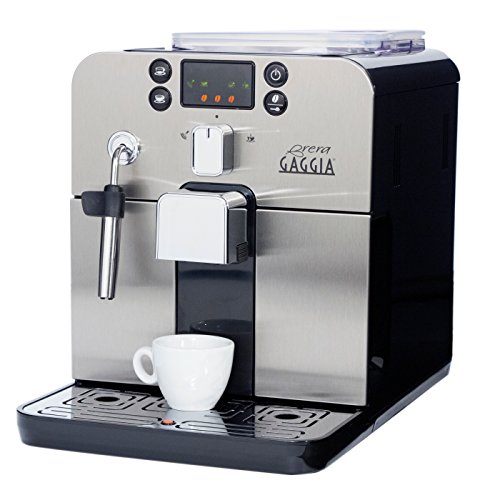
Gaggia Brera – Best for Compact Spaces
The Gaggia Brera is a tiny machine that packs a serious punch. I have used it in kitchens with very little counter space, and it never felt like it was getting in the way. It is sleek, quiet, and remarkably simple to set up.
It features a front-loading water tank and dreg drawer. This is a game changer because you never have to move the machine to fill it up. The grinder is adjustable, allowing you to fine-tune your grind size settings to get the perfect flow.
I found the espresso quality to be rich and bold. The crema is consistently thick, which is a sign that the pressure system is doing its job well. It handles daily use with grace, even after several months of testing. It is a very sturdy machine.
You should choose this if you live in an apartment or have a small kitchen. You might find the small hopper annoying if you drink a lot of coffee, but it is a fair trade for the size. It is a reliable, no-nonsense coffee maker.
Pros
- ✔︎Front-loading water tank
- ✔︎Very compact design
- ✔︎Classic Italian coffee taste
- ✔︎Energy-saving standby mode
- ✔︎Stainless steel finish
Cons
- ✘Small bean hopper
- ✘Limited drink variety
Jura E8 – Best for Premium Features
The Jura E8 feels like a luxury car for your countertop. It is more expensive than the others, but the quality of the coffee is on another level. The build quality is top-tier, and the internal systems are designed to last for many years.
It features the Pulse Extraction Process, which optimizes the extraction time for short drinks. This results in a depth of flavor that is hard to find in other automatic units. The touchscreen interface makes selecting your favorite drink a breeze.
I was impressed by the sheer number of drink options available. You can customize everything from strength to temperature. The cleaning cycles are fully automated, so you never have to worry about buildup inside the machine. It does the hard work for you.
This is for the person who wants the best and does not mind the higher cost. It is a big investment, but it replaces the need for a coffee shop. You get what you pay for with this machine.
Pros
- ✔︎Advanced extraction technology
- ✔︎Large color display
- ✔︎Beautiful design aesthetics
- ✔︎Fully automated cleaning
- ✔︎Massive drink menu
Cons
- ✘High price tag
- ✘Needs specialized cleaning tablets
Capresso E8 – Best for Budget-conscious Buyers
The Capresso E8 is a sensible choice if you want an automatic machine without spending a fortune. It is not as flashy as some competitors, but it gets the job done reliably. The design is straightforward and easy for anyone to understand.
It includes a dedicated milk frother that is quite capable for its price range. The pump system generates enough pressure to pull a decent shot of espresso. You can adjust the coffee strength, which is a nice feature to have when you need an extra boost.
I tested it for a month, and it performed consistently. It is not the quietest machine in the world, but it is not distracting either. It hits the basics of espresso machine maintenance without adding unnecessary complications that often lead to technical failures.
This is best for beginners who want a simple solution. It lacks the bells and whistles of high-end units, but it delivers on the core experience. It is a solid entry into the world of automatic brewing.
Pros
- ✔︎Very affordable price
- ✔︎Simple user interface
- ✔︎Dedicated milk system
- ✔︎Adjustable coffee strength
- ✔︎Lightweight build
Cons
- ✘Noisy grinding process
- ✘Plastic parts feel thin
Quick Comparison
| # | Product Name | Standout Feature | Best For | Our Rating |
|---|---|---|---|---|
| 1 | De’Longhi Magnifica S | Reliable pump | Daily espresso | ⭐ 4.7/5 |
| 2 | Philips 3200 LatteGo | Easy milk cleaning | Busy mornings | ⭐ 4.6/5 |
| 3 | Breville Barista Express | Assisted tamping | Learning skills | ⭐ 4.8/5 |
| 4 | Gaggia Brera | Front access | Small kitchens | ⭐ 4.5/5 |
| 5 | Jura E8 | Extraction tech | Premium quality | ⭐ 4.9/5 |
| 6 | Capresso E8 | Budget value | First timer | ⭐ 4.2/5 |
Final Thoughts
I hope this list helps you find the right machine for your home. If you want my personal pick, the Breville Barista Express Impress offers the perfect balance between automation and learning. It makes the process fun without the stress of manual dialing. Think about your counter space and your daily routine before you buy, and you will be enjoying great coffee in no time.
What to Look for Before You Buy Automatic Espresso Machines for Beginners
Grinder Quality: Why Your Beans Need Precision
The grinder is the heart of your machine. If it produces uneven grounds, your coffee will taste sour or bitter, regardless of how expensive the unit is. You want a grinder that stays cool to preserve the flavor of your roast.
Look for ceramic or hardened steel burrs. These materials last longer and provide the consistency you need for a great shot. Avoid machines that use blade grinders, as those chop the beans unevenly and create heat that ruins your coffee.
Check the setting options before you purchase. A good grinder should offer at least ten different settings so you can tweak the fine-tuning of your espresso. A wider range of options is always better for finding your perfect flavor profile.
Cleaning Systems: How to Avoid the Maintenance Headache
Automatic machines are wonderful, but they need to be cleaned often. If the internal parts are hard to reach, you will eventually stop using the machine. Look for units with removable brew groups that rinse off easily under the tap.
Verify if the machine has automated descaling alerts. These systems track your usage and tell you exactly when to run a cycle, which extends the life of your equipment. It is much easier to follow a prompt than to guess.
Choose a machine with a simple milk system. Tubes and tiny nozzles are magnets for old milk buildup. Systems that snap apart or have fewer parts make your daily routine much faster. You will thank yourself later for picking a simple design.
Pressure Capabilities: Why 15 Bars is the Gold Standard
Espresso needs high pressure to push water through the compressed coffee grounds. A machine that cannot maintain stable pressure will result in a watery, weak shot. You need at least 15 bars of pressure for a truly professional result.
Look for a machine that maintains that pressure consistently throughout the entire cycle. The best units have high-quality pumps that do not fluctuate during the extraction process. This stability is what gives you that rich, golden crema on top of your cup.
If a machine claims high pressure but feels flimsy, be careful. The internal pump must be strong enough to handle daily use for years. Check user reviews to see if owners report pump failure after just a few months of usage.
Milk Frothing: Finding the Right Texture
Most beginners want the option to make lattes or cappuccinos. You should decide if you want an automated milk wand or a manual steam arm. Automatic wands are great for speed, while manual wands let you control the foam density.
Look for a steam wand that produces enough heat for high-quality micro-foam. If you prefer the automated approach, check how many settings the machine offers for foam thickness. This allows you to match the texture to your favorite drink style.
Think about how much effort you want to put into the process. Automatics are faster, but they can be harder to clean. Manual wands take practice but provide the most satisfaction when you finally pour the perfect cup of coffee.
Drink Versatility: What Do You Actually Drink
You might be tempted to buy a machine with twenty different drink options. However, most people only use two or three. Consider if you really need a machine that makes twelve types of foam-heavy drinks or just a solid espresso.
Check if the machine allows for custom profiles. Being able to save your favorite strength or volume setting makes the process much more efficient. You should be able to get your preferred drink with just one button press every morning.
Avoid paying for features you will never use. If you only drink black coffee, a complex milk system is just an extra part that needs cleaning. Stick to the features that matter most to your specific daily drinking habits.
Footprint and Size: Will It Fit Your Counter
Kitchen space is valuable, and these machines can be quite large. Measure your counter before you click the buy button. You need enough height to fill the water tank from the top, or at least easy access to the sides.
Look for front-loading water tanks and dreg drawers if you have cabinets above your coffee station. These features save you from having to move the machine every time you need to maintain it. It is a small detail with big impact.
Consider the weight of the unit as well. A heavier machine often implies better internal components, but it is harder to move. Find a balance that suits your kitchen layout while ensuring the machine is heavy enough to feel stable while grinding.
- ✔︎Ceramic grinders for better flavor
- ✔︎Removable brew units for easy cleaning
- ✔︎15 bars of pressure for thick crema
- ✔︎Front-loading water and dreg drawers
- ✔︎Programmable drink strength settings
- ✔︎Compact designs for smaller counters
Final Thoughts
I hope you feel more confident about choosing your machine now. Remember that the best automatic espresso machine for your home is the one that fits your space and makes your morning routine easier. Don’t worry about getting every feature perfectly right the first time. Focus on reliability and maintenance, and you will be happy with your purchase.
Frequently Asked Questions
Is It Safe to Use This Machine for Multiple Cups in a Row?
Yes, most automatic espresso machines are designed to handle several cups consecutively. In my experience, high-quality units can easily brew five or six drinks back-to-back without overheating. Just monitor the water tank and the bean hopper to ensure you do not run out of supplies during a busy morning session at your home.
Can I Use Pre-ground Coffee Instead of Beans?
Many machines include a bypass chute for pre-ground coffee. This is a great feature if you have a guest who prefers decaf. I recommend only using this for occasional use, as the internal grinders on these machines provide a much fresher taste than pre-ground coffee that has been sitting in a bag for days.
Do I Need to Use Distilled Water?
Do not use distilled water in your espresso machine. These machines rely on minerals in the water to detect fluid levels, and distilled water can confuse the sensors. I always recommend using filtered tap water, which protects the machine from scale buildup while maintaining the flavor profile that the manufacturer intended for you.
Can I Adjust the Temperature of My Espresso?
Many mid-range to high-end automatic machines allow you to adjust the brew temperature through the menu. This is helpful if you find your coffee is coming out too bitter or not hot enough. I usually suggest starting at the middle setting, then adjusting by one degree at a time until you find the perfect taste.
Is It Difficult to Descale These Machines?
Descaling is not hard, but it is a necessary chore for every machine owner. Most modern units have a built-in alert that tells you exactly when to run a cycle. I recommend using the specific descaling solution recommended by the manufacturer to ensure you do not void your warranty or damage the internal plumbing.
Do I Need to Clean the Milk System Every Day?
You should rinse your milk system after every use to prevent bacteria growth. If your machine has a removable carafe, it is best to store it in the fridge between uses. I find that daily maintenance takes less than two minutes, and it keeps your coffee tasting fresh and clean every single morning.
Can I Leave Beans in the Hopper for a Week?
It is not ideal to leave beans in the hopper for a long time. The oils on the beans will eventually go stale when exposed to air and light. I recommend only adding enough beans for a day or two of coffee. This ensures every cup tastes as fresh as the day you bought the roast.
Is a Ceramic Grinder Better Than Steel?
Both materials have their strengths. Ceramic grinders run cooler and are quieter, which is a big plus in a small home. Steel grinders are more durable and can handle harder, darker roasts without chipping. In my testing, both perform well for beginners, so focus on the grinder’s adjustability rather than just the material type alone.
Do I Need a Special Outlet for These Machines?
Most automatic espresso machines run on a standard household outlet. You do not need a special power setup for these units. I recommend plugging the machine directly into a wall outlet rather than using an extension cord, as these machines draw significant power during the heating phase to ensure your water is ready instantly.
Can I Make Cold Coffee with These Machines?
While most machines are built for hot espresso, you can make an iced latte by brewing a strong shot directly over a glass filled with ice. Some premium models include an iced coffee setting, but you can achieve the same result with any machine by simply using a stronger setting and adding cold milk or water.