As an Amazon Associate, I earn from qualifying purchases at no extra cost to you.
Are Dr Brown’s Bottles Dishwasher Safe? Expert Guide

Many new parents feel overwhelmed by the pile of tiny bottle parts after every feeding. I remember my first weeks with a newborn, staring at the Dr. Brown’s vent system pieces scattered across the counter, wondering how to clean them without losing my mind. The good news is these popular anti-colic bottles make life easier than you think, especially when it comes to the dishwasher. Parents everywhere love how simple and safe it can be to keep everything spotless for their little one.
Start by disassembling all bottle parts completely including the bottle body, nipple, collar, vent insert, and reservoir. Rinse everything right after use to prevent milk buildup. Place the main bottle on the top rack spikes for stability. Put small parts like vents, nipples, and caps into a dedicated Dr. Brown’s dishwasher basket or a mesh bag to stop them from flying around. Run on a gentle or normal cycle with hot water, avoiding the heated dry if possible to protect plastic pieces longer. Always check for any residue in the vent system before loading and air dry fully after the cycle ends for best results.
Are Dr Brown’s Bottles Officially Dishwasher Safe?
Yes, Dr Brown’s bottles are officially dishwasher safe according to the brand. Their website and product guides clearly state that all parts including the bottles, nipples, and the famous internal vent system can go in the dishwasher. This applies to both plastic and glass versions of the Options+ narrow bottles.
The key rule is to always use the top rack only. The top rack stays cooler than the bottom, so it protects the plastic from warping and keeps everything safe. Many parents have used this method for months or even years without problems. The brand even sells special accessories to make it even better. This official approval gives peace of mind when you want to save time on hand washing.
Parents often worry about the markings fading or parts getting damaged. In most cases, these issues are rare if you follow the top rack rule. The bottles are made to handle regular dishwasher heat when placed correctly. Always check your specific model instructions just to be sure, but the general guideline stays the same across their popular lines.
This makes daily cleanup much faster for busy families. You can focus more on cuddles and less on scrubbing.
- Dr Brown’s confirms dishwasher safe status for all parts.
- Top rack only is the main requirement.
- Works for plastic and glass bottles.
- Official accessories help with small pieces.
Where Should You Place Dr Brown’s Bottles in the Dishwasher?
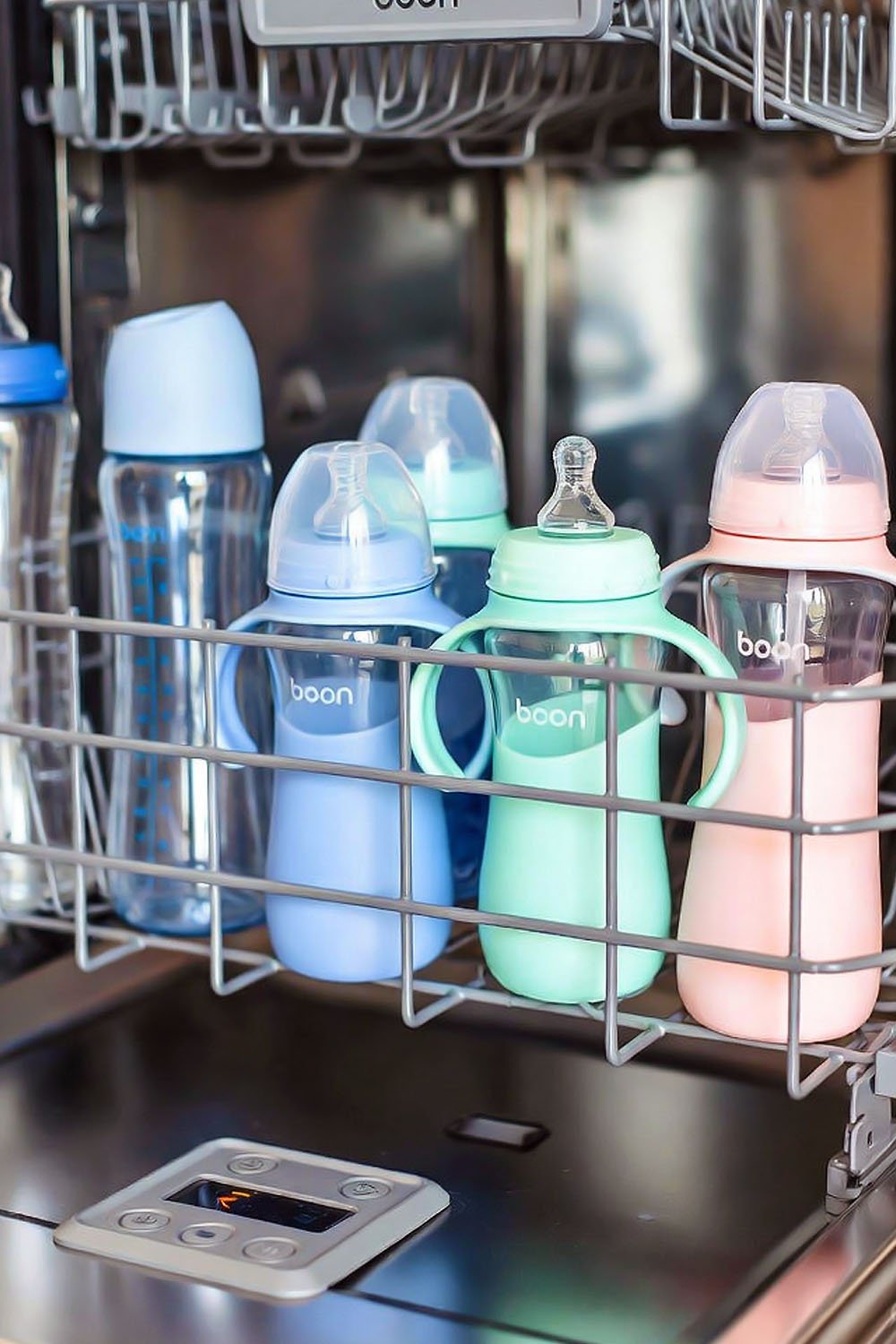
Always load Dr Brown’s bottles on the top rack for the best results. The top rack has special prongs or spikes that hold bottles upside down securely. This lets water flow through easily and dry them properly. Place the main bottle body on these spikes so it stays upright and stable during the wash. Avoid the bottom rack because it gets hotter and might cause plastic parts to warp over time.
For the small pieces, never let them roll around loose. Use a mesh basket or the official Dr Brown’s dishwasher basket designed for their narrow bottles. This basket has slots that fit the vent, reservoir, nipples, and caps perfectly. It holds up to three full sets at once, so you can clean multiple bottles in one go. Load everything carefully so nothing blocks the spray arms.
This setup ensures thorough cleaning without any parts getting lost or damaged. Many parents say it changes their routine completely. The bottles come out clean and ready for the next feeding.
- Use top rack for bottles and parts.
- Secure small items in a basket.
- Position bottles upside down on spikes.
- Prevent parts from moving freely.
How Do You Prepare Dr Brown’s Bottles Before Dishwasher Use?
Start by disassembling every piece right after feeding. Take apart the nipple, collar, vent insert, reservoir, and bottle body. Rinse everything under warm water to remove milk or formula residue immediately. This step stops buildup and makes the dishwasher work better later.
Next, use the included cleaning brush to scrub the tiny holes in the vent insert and the tube in the reservoir. These areas trap milk easily, so clean them by hand first. Skipping this can lead to mold over time even after dishwasher cycles. Give the nipple a gentle brush inside too for complete cleanliness.
Once pre-cleaned, load the items into the dishwasher. This quick prep takes just a minute but keeps your bottles in great shape for longer. It combines hand care with machine convenience perfectly.
Parents find this routine becomes second nature fast. It ensures no hidden spots stay dirty.
- Disassemble completely after each use.
- Rinse all parts right away.
- Brush vent system by hand.
- Pre-clean for best dishwasher results.
What Accessories Help with Dishwashing Dr Brown’s Bottles?
Dr Brown’s makes handy accessories that make dishwasher use super easy. Their official dishwasher basket is a favorite among parents. It fits narrow bottle parts perfectly with special slots for vents, nipples, caps, and more. You can wash up to three full sets at once without anything getting lost. It even has a side spot for extras like pacifiers.
Another great option is the silicone dishwasher bag. This soft bag holds small items securely and fits on the top rack. It works for nipples, vents, or even breast pump parts. The bag snaps shut and saves space in your dishwasher.
Many families also love the drying rack for after the cycle. It holds everything upright so air dries quickly and prevents water spots. These tools turn a chore into something simple.
Investing in one or two accessories saves so much time and stress.
- Dishwasher basket holds multiple sets.
- Silicone bag keeps small parts safe.
- Drying rack helps with air drying.
- Accessories make cleaning effortless.
Can You Use Heated Dry on Dr Brown’s Bottles in the Dishwasher?
It’s best to skip the heated dry cycle when washing Dr Brown’s bottles. The extra heat can sometimes cause plastic parts to warp slightly over many uses. Instead, open the dishwasher door after the wash ends and let everything air dry naturally. This gentle method keeps nipples and vents in top shape longer.
Most modern dishwashers have a good heated wash but the dry cycle pushes temperatures higher. Air drying works perfectly and avoids any risk. Parents report their bottles last years this way with no issues.
If your machine has a sanitize cycle, you can use it safely on the top rack. Just stick to air drying afterward. This small change makes a big difference in bottle life.
- Avoid heated dry to protect plastic.
- Air dry by opening the door.
- Sanitize cycle is okay if needed.
- Gentle drying keeps parts perfect.
What Common Mistakes Should You Avoid with Dr Brown’s in the Dishwasher?
One big mistake is putting small parts loose in the dishwasher. They can fly around, get lost, or block water flow. Always use a basket or bag to keep them contained. Another error is loading on the bottom rack where heat is too strong. Stick to the top rack every time.
Some parents forget to pre-clean the vent system by hand. This leads to trapped residue and possible mold. Always brush those tiny areas first. Also, do not overload the dishwasher. Give items space for water to reach everywhere.
Avoid using harsh detergents or very hot settings that might fade markings. Mild baby-safe detergent works best. These simple fixes prevent most problems.
Learning from others helps you avoid these easy traps.
- Never load small parts loose.
- Always pre-clean vent system.
- Use top rack only.
- Give space for proper cleaning.
Final Thoughts
Dr Brown’s bottles are a smart choice for parents who want safe, easy cleaning with the dishwasher. Stick to the top rack, use a basket for small parts, and pre-clean the vent system for the best outcome. This routine saves time and keeps bottles fresh for your baby. Give it a try, and you will wonder how you managed without it. Happy feeding and less scrubbing!
| Step | Action | Helpful Tip |
|---|---|---|
| 1 | Disassemble all parts | Take apart bottle, nipple, collar, vent, reservoir |
| 2 | Rinse immediately | Remove milk residue right after feeding |
| 3 | Brush vent system | Clean tiny holes and tube with included brush |
| 4 | Load top rack | Place bottle upside down on spikes |
| 5 | Use basket for small parts | Fits vents, nipples, caps securely |
| 6 | Choose gentle cycle | Normal or eco mode with hot water |
| 7 | Skip heated dry | Air dry by opening door after cycle |
| 8 | Air dry fully | Store when completely dry to prevent mold |
Frequently Asked Questions (FAQs)
Is it safe to put Dr Brown’s vent system in the dishwasher?
Yes, the vent system is completely dishwasher safe on the top rack. The brand says all parts including the insert and reservoir can go in. Just clean the small holes by hand first with the brush to avoid buildup. Use a dedicated basket to keep pieces secure. Many parents run it daily without issues. Air dry afterward to keep it fresh. This method saves time while keeping the anti-colic feature working well.
Can I put Dr Brown’s glass bottles in the dishwasher?
Yes, Dr Brown’s glass bottles are safe for the dishwasher on the top rack only. They handle heat and thermal changes well. Use the silicone sleeve for extra protection if you have it. Follow the same rules as plastic ones for small parts. Parents love how glass cleans up shiny without scratches. Check markings after a few cycles, but most find they stay clear.
Do I need a special basket for Dr Brown’s bottles?
It helps a lot but you do not absolutely need one. The official Dr Brown’s dishwasher basket makes things easier by holding up to three sets and keeping parts in place. A regular mesh bag works too if you already have it. Without one, parts might move around. Most busy parents say the basket is worth it for peace of mind.
Is it okay to use hot water cycle for Dr Brown’s bottles?
Yes, a hot water cycle is fine and even recommended for good cleaning. Just keep it on the top rack to avoid too much heat on plastic. The brand designs bottles to handle normal dishwasher temperatures. Use mild detergent for baby items. This kills germs effectively while staying safe.
Can nipples from Dr Brown’s go in the dishwasher every day?
Yes, nipples are dishwasher safe on the top rack. They hold up well over time with regular use. Pre-rinse and brush inside for best results. Replace nipples every few months anyway for flow issues. Many parents wash them daily without problems. Air dry to keep them soft.
Do Dr Brown’s bottle markings fade in the dishwasher?
Most parents say markings stay clear after many cycles when using the top rack. Avoid bottom rack and harsh heat to prevent fading. Use gentle detergent too. If you notice any wear, hand washing can help preserve them longer. Overall, it is not a common big issue.
Is it safe to sterilize Dr Brown’s bottles after dishwasher?
Yes, you can sterilize after or instead of dishwasher. The brand says they work in microwave steam sterilizers, electric ones, or boiling water. Dishwasher sanitize cycle also helps. Combine methods for extra clean. Follow instructions for each way to keep bottles safe.
Do I need to hand wash Dr Brown’s bottles sometimes?
You can rely on the dishwasher most days, but hand washing is good for deep cleans. Use it if you notice residue or before first use. The brand says both ways work well. Many parents mix both for convenience. Hand wash the vent carefully if needed.