As an Amazon Associate, I earn from qualifying purchases at no extra cost to you.
What Temperature to Sterilize Jars in Oven – Expert Guide

When I first tried making jam at home, I was more nervous about the jars than the recipe itself. I kept wondering if they were truly clean enough or if I'd ruin hours of work with one small mistake. That's when oven sterilizing saved me. It's calmer, less messy, and easier to control than boiling water. Knowing exactly what temperature to sterilize jars in oven makes all the difference between confident canning and constant doubt.
Key Takeaways: Wash jars thoroughly and inspect for cracks, dry them fully, place them upside down on a baking tray, heat in a preheated oven at 225°F (107°C) for 20 minutes, keep lids out of the oven, boil lids separately, handle hot jars with oven mitts, avoid sudden temperature changes, and use jars right away or store them carefully in a clean space.
Getting Jars Ready Before They Go in the Oven
Before the oven even comes on, your jars need proper attention. Start with a good wash using warm water and dish soap. This step removes dust, oils, or food traces that heat alone won't fix. Rinse them well so no soap film stays behind. Then dry the jars completely. Even small drops of water can turn into steam and stress the glass once heated.
Next, take a close look at each jar. Run your finger around the rim and sides to check for tiny chips or cracks. These weak spots often cause jars to break in the oven. If a jar looks questionable, don't risk it. Glass failures usually happen when we ignore small warning signs.
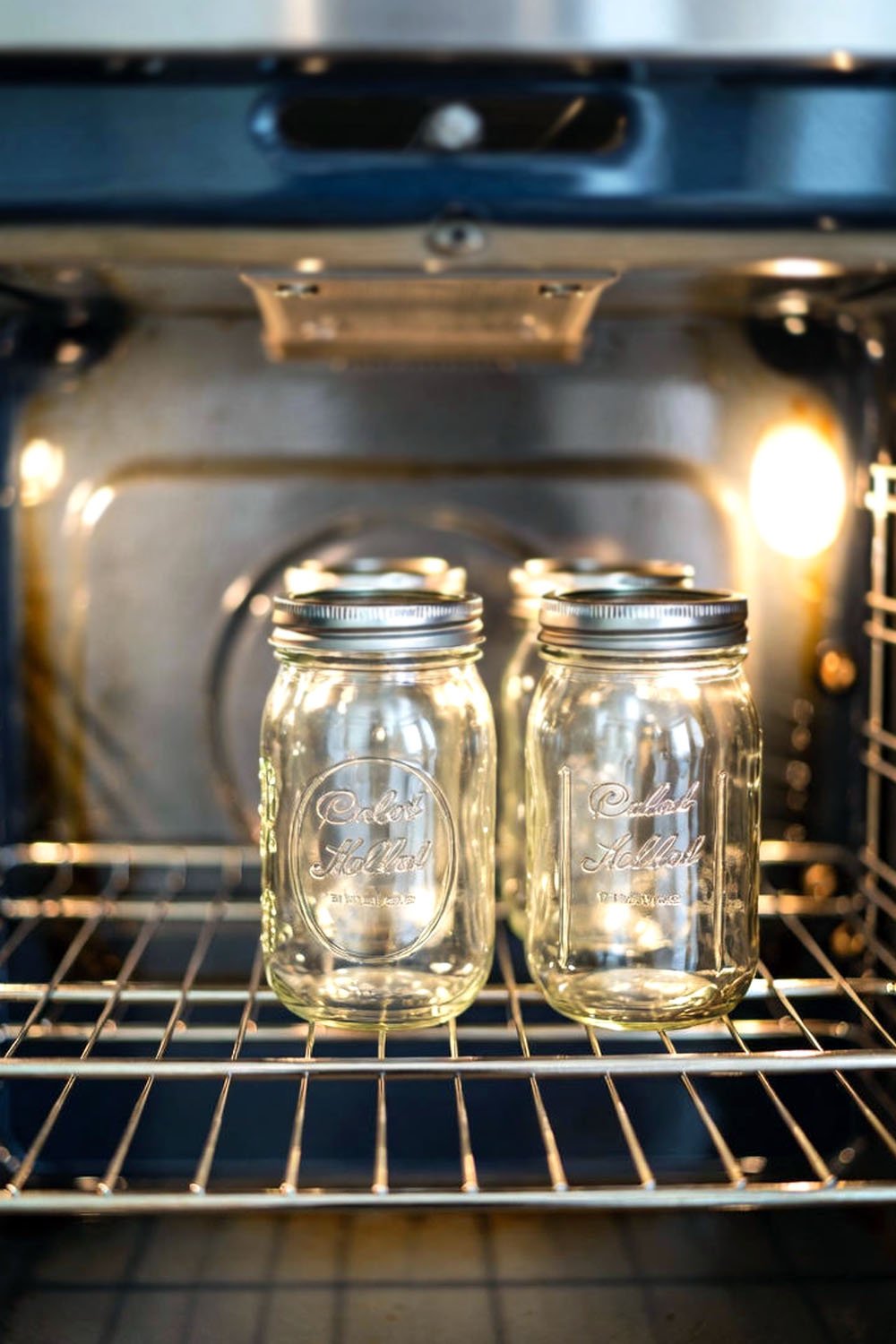
Once clean and dry, remove labels and sticky residue. A short soak in warm water helps loosen them. Arrange the jars upside down on a baking tray so heat flows evenly inside. Leave space between each jar so they don't touch. Lids should stay out of the oven since the rubber seals don't handle dry heat well. This preparation sets the foundation for safe sterilization.
- Wash jars with soap and water
- Rinse and dry fully
- Check for cracks or chips
- Remove labels and glue
- Place jars upside down on tray
Choosing the Correct Oven Temperature
The biggest question most people ask is about temperature. For home canning, 225°F (107°C) is the safest and most reliable option. This temperature is hot enough to kill bacteria and mold without pushing the glass too far. Higher heat doesn't improve sterilization and only increases the risk of cracking.
Always preheat the oven before placing jars inside. Putting cold jars into a heating oven causes uneven stress on the glass. Once preheated, slide the tray onto the middle rack where heat stays most consistent. If your oven runs hot or cold, an oven thermometer helps confirm accuracy.
Let the jars stay in the oven for 20 minutes after the oven reaches full temperature. This duration allows the heat to penetrate the entire jar. You'll notice the glass becomes evenly hot but not glowing or stressed. Keep lids separate and simmer them in water instead. Matching the right temperature with the right timing keeps sterilization effective and gentle.
- Preheat oven fully
- Set temperature to 225°F
- Use middle rack
- Heat jars for 20 minutes
- Simmer lids separately
Mistakes That Can Ruin Sterilization
Many problems happen when people rush or improvise. One common mistake is placing wet jars in the oven. Trapped moisture turns into steam and can cause sudden cracks. Another issue is cranking the oven hotter to "speed things up." This doesn't help and often ruins jars.
Some people also forget to clean jars properly, assuming heat alone handles everything. Dirt or grease can block heat contact and affect sealing later. Skipping inspection is another risk. Even a hairline crack can cause the jar to fail once hot.
Lids are often mishandled too. Oven heat damages rubber seals, leading to failed closures. Stick to simmering lids gently in water. Avoid leaving jars in the oven far longer than needed. Sterilization isn't improved by extra time, but glass fatigue is. Careful, calm steps prevent waste and frustration.
- Don't heat wet jars
- Avoid high temperatures
- Always clean jars first
- Inspect rims carefully
- Keep lids out of oven
Handling Hot Jars Without Damage
Once jars come out of the oven, they are extremely hot and fragile. Thick oven mitts are a must. Never grab jars with bare hands or thin towels. Move slowly and give yourself space on the counter.
Set jars on a folded towel or wooden board, not a cold stone surface. Cold countertops can shock the glass and cause cracking. Avoid stacking jars or letting them touch each other while hot. Even slight contact can lead to stress fractures.
If you're filling jars right away, make sure the food is warm, not cold. Pouring cold contents into hot jars often causes breakage. Let jars cool slightly if needed, but don't wait too long or they'll lose sterilization benefits. Gentle handling protects your hard work.
- Use thick oven mitts
- Avoid cold surfaces
- Don't stack hot jars
- Keep jars spaced apart
- Match jar and food temperature
How Long Jars Need to Stay in the Oven
Time matters just as much as heat. The standard recommendation is 20 minutes at 225°F, starting once the oven reaches temperature. This duration reliably kills bacteria and mold on clean jars.
Shorter times may leave microorganisms behind, risking spoilage. Longer times don't add protection and may weaken the glass over repeated uses. Consistency is key, especially if you can often.
If your oven temperature fluctuates, monitor it closely. Small variations are normal, but large swings should be adjusted. After the 20 minutes, remove jars carefully or leave them in the turned-off oven until needed. This balance of time and heat creates dependable sterilization every time.
- Sterilize for 20 minutes
- Start timing after preheat
- Avoid extended heating
- Monitor oven temperature
- Remove jars carefully
Storing Jars After Sterilizing
Ideally, sterilized jars should be filled right away. If that's not possible, proper storage matters. Let jars cool fully before moving them. Store them upright in a clean, dry area away from dust and moisture.
Cover jars loosely with a clean cloth if they'll sit out for a while. Avoid sealing them airtight before use, as trapped air can carry contaminants. Lids should stay in hot water until needed.
If you plan to store empty sterilized jars overnight, label them so you remember they're ready. While oven sterilization is effective, jars can re-contaminate if left exposed too long. Using them promptly ensures the best results.
- Use jars immediately if possible
- Store upright and dry
- Cover loosely with cloth
- Keep lids hot
- Label if storing overnight
| Action | Details | Helpful Tip |
|---|---|---|
| Washing jars | Warm water and soap | Rinse thoroughly |
| Inspection | Check rims and sides | Discard chipped jars |
| Oven temperature | 225°F (107°C) | Use oven thermometer |
| Heating time | 20 minutes | Start after preheat |
| Jar placement | Upside down on tray | Leave space between jars |
| Lid sterilizing | Simmer in water | Never oven heat lids |
| Cooling surface | Towel or wood | Avoid cold counters |
Final Thoughts
Oven sterilizing jars doesn't have to feel intimidating. With the right temperature, steady timing, and gentle handling, it becomes a simple habit you can trust. Stick to 225°F, take your time, and respect the glass. When done properly, this method gives you confidence that your preserves are safe, clean, and ready to enjoy long after the jars are sealed.
Frequently Asked Questions (FAQs)
Is it safe to sterilize jars in the oven?
Yes, it's safe when done correctly. Using a moderate temperature like 225°F prevents glass damage while still killing germs. Jars must be clean and dry before heating. Avoid placing lids in the oven, and always handle jars carefully after heating. Many home canners prefer the oven because it's less messy than boiling water.
Can I use any glass jar in the oven?
Not all jars are suitable. Thick canning jars are designed to handle heat. Thin jars from store-bought foods may crack or shatter. Always inspect jars for chips or cracks, and avoid using damaged or unknown glass types when oven sterilizing.
Do I need to wash jars before oven sterilization?
Yes, washing is essential. Heat alone doesn't remove dirt or grease. Soap and water clean the surface so heat can work properly. Skipping washing often leads to sealing issues or spoilage later.
Is it okay to use a higher temperature to save time?
Higher temperatures increase the risk of broken jars without improving safety. Sterilization depends on steady heat, not extreme heat. Sticking to 225°F protects your jars and your food.
Can I sterilize lids in the oven too?
No, lids should not go in the oven. The rubber seals can warp or break down. Simmer lids gently in water instead, keeping them hot until ready to use.
Do I need to sterilize jars for jam?
Yes. Even high-sugar foods like jam can grow mold if jars aren't sterile. Proper sterilization helps your jam stay fresh and shelf-stable longer.
Is it safe to reuse old jars?
It depends on their condition. Jars without cracks or chips can often be reused. Avoid jars that feel thin or fragile. When unsure, it's safer to replace them.
Can I sterilize jars ahead of time?
You can, but it's best to use them soon after. If storing, keep them clean, dry, and covered. The longer they sit, the higher the chance of contamination.